F-1 to H-1B: How the Transition and the Cap-Gap Work
NRI Guide desk
NRI Herald • July 12, 2026
3 min read
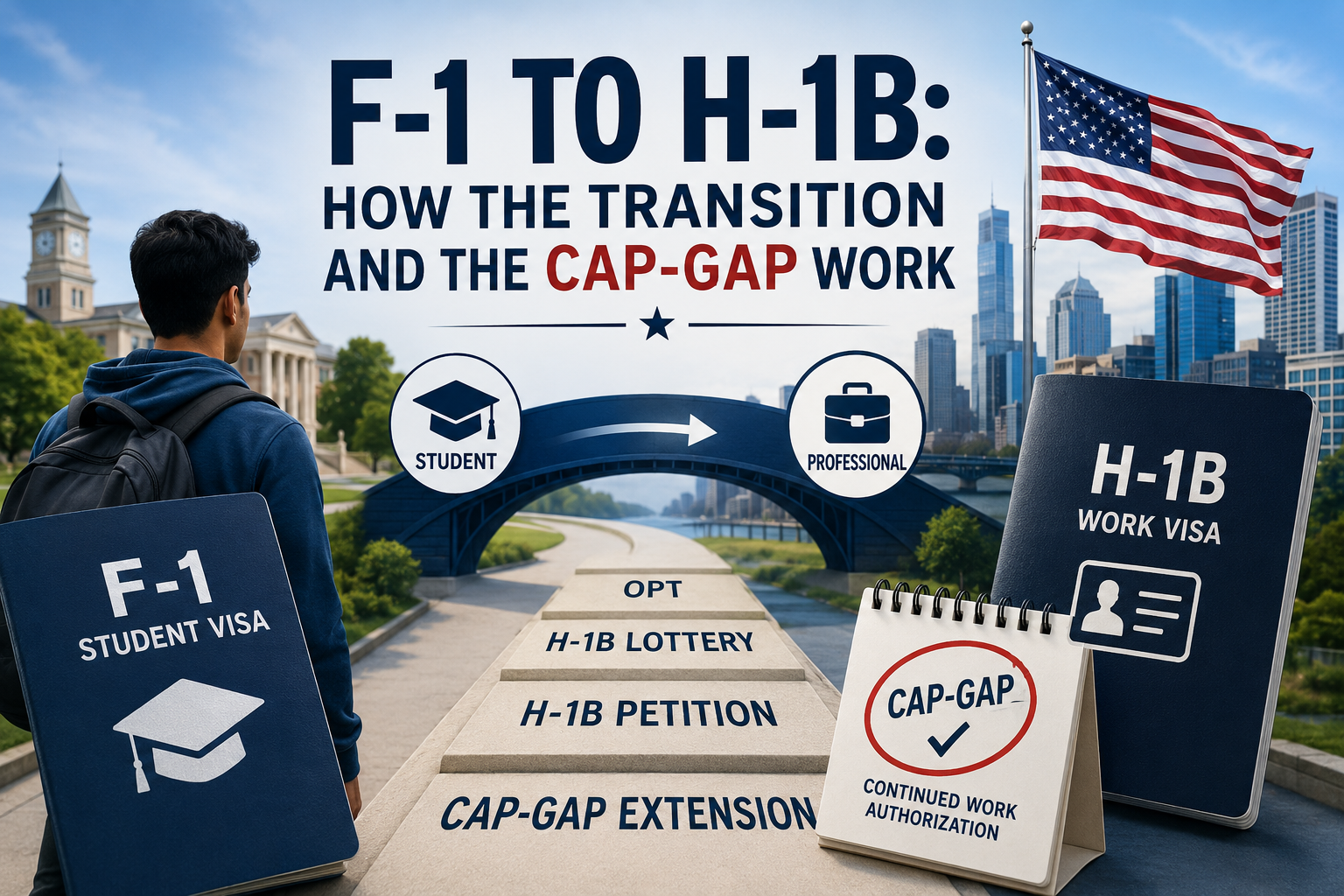
The most common immigration journey for Indian students is F-1 to OPT to H-1B. The tricky part is the handover: your student work authorisation can run out months before the H-1B actually starts. A rule called the cap-gap is what stops you from falling out of status in between. Here is how the transition works.
You study on an F-1 visa, work on OPT or STEM OPT after graduation, and during that time an employer enters you in the H-1B cap lottery. Our separate guide explains the lottery itself; this piece is about the timing and the gap.
The H-1B lottery registration happens in March. If you are selected, your employer files the petition and typically requests an October 1 start, the first day of the new fiscal year. But your OPT might expire earlier, say in May or June, leaving a gap of several months with no work authorisation and, potentially, no valid status.
The cap-gap rule solves this. If you have a timely-filed H-1B petition that is pending or approved and requests an October 1 start, your F-1 status is automatically extended to September 30. If your OPT was still valid when the petition was filed, your work authorisation is extended too, so you can keep working right up to the H-1B start. If your OPT had already ended but you were in your grace period, your status is extended but you cannot work until October 1.
Stay in status, keep your job (if cap-gap covers work), and prepare for the October 1 switch to H-1B. Your employer and school handle the paperwork; your job is to not do anything that breaks status in the meantime.
International travel during the cap-gap period is risky and can forfeit the cap-gap benefit, because re-entry rules are strict. If you must travel between OPT ending and H-1B starting, get advice from your school's international office or an attorney first.
The F-1 to H-1B move hinges on timing and staying continuously in status. Understand your OPT end date, whether cap-gap covers you, and the October 1 milestone. Rules change, so confirm the current cap-gap and travel guidance at uscis.gov and with your DSO before you act.
Highlighted words show why each story was matched

NRI Herald • August 17, 2026

NRI Herald • August 20, 2026

NRI Herald • August 6, 2026

NRI Herald • August 13, 2026