OCI vs PIO: What Changed and What the OCI Card Gives You
NRI Guide desk
NRI Herald • July 12, 2026
3 min read
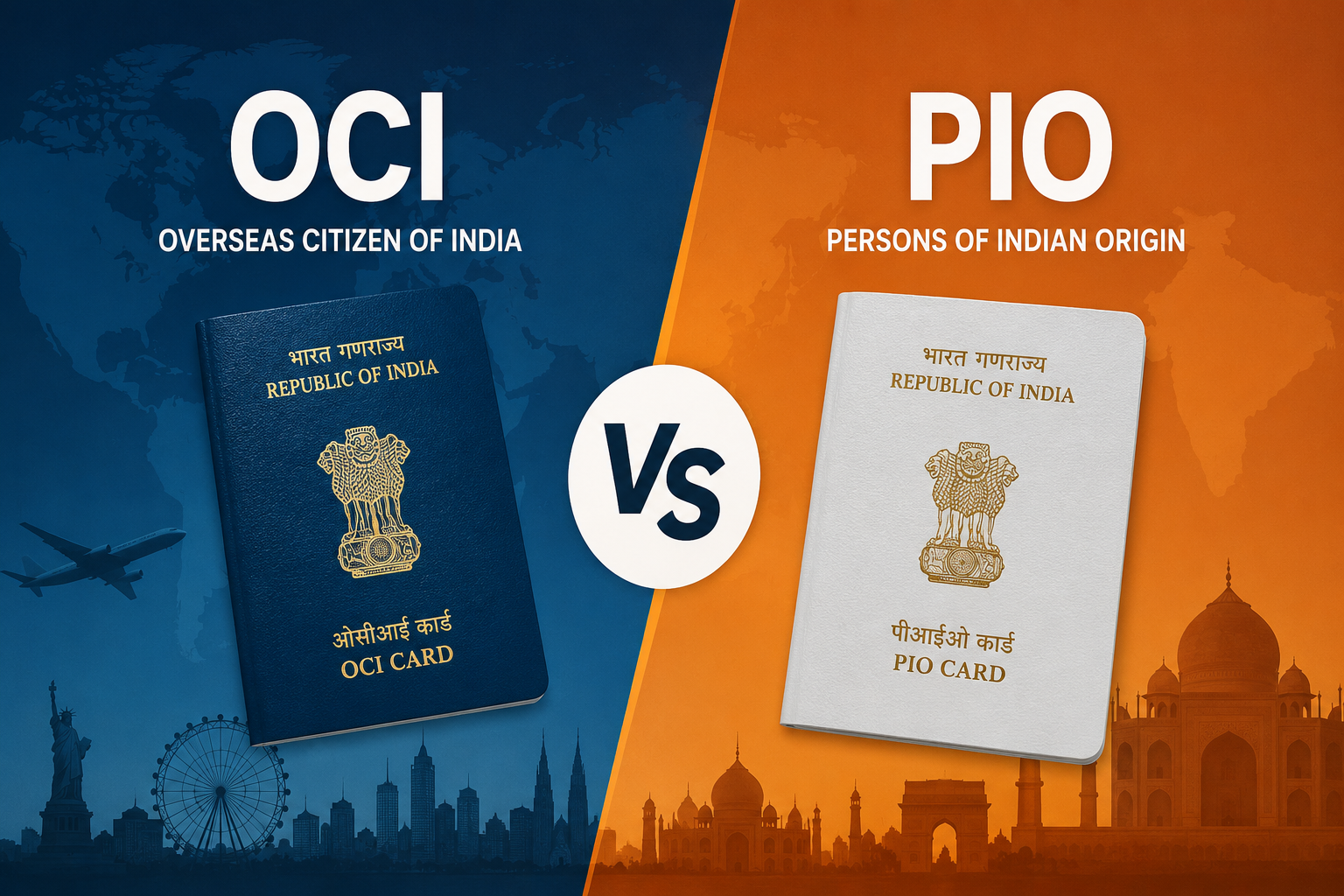
If you have heard both OCI and PIO and wondered which one you need, the short answer is simple: PIO is gone, and OCI is now the single card for people of Indian origin abroad. Here is what happened and what the OCI actually gives you. This is general information, not legal advice.
India once ran two parallel schemes, the Person of Indian Origin (PIO) card and the Overseas Citizen of India (OCI) card. In 2015 the government merged PIO into OCI, stopped issuing new PIO cards, and moved existing holders toward OCI. Today, OCI is the scheme that matters.
OCI is a lifelong visa and a bundle of rights, not citizenship. It gives you a strong, permanent link to India without making you an Indian citizen.
Broadly, people of Indian origin, former Indian citizens and their descendants across several generations, and the foreign spouses of Indian citizens or OCI holders, can apply, subject to the current rules and exceptions. Citizens of a few specified countries are not eligible.
OCI is lifelong but must be re-issued at certain passport renewals, up to age 20 and once after 50. Our separate OCI renewal guide walks through the re-issuance process step by step.
Forget PIO; OCI is the card to get and keep. It offers most of what a diaspora family needs, lifelong travel and NRI-level rights, without being citizenship. Confirm current eligibility and rules on the official OCI portal at ociservices.gov.in or with your Indian consulate.
Fresh headlines while we surface more on this topic
'%2F%3E%3Cstop%20offset%3D'1'%20stop-color%3D'hsl(354%2C%2055%25%2C%2038%25)'%2F%3E%3C%2FlinearGradient%3E%3C%2Fdefs%3E%3Crect%20width%3D'800'%20height%3D'600'%20fill%3D'url(%23g)'%2F%3E%3Ctext%20x%3D'400'%20y%3D'300'%20text-anchor%3D'middle'%20font-family%3D'Georgia%2Cserif'%20font-size%3D'44'%20font-weight%3D'700'%20fill%3D'rgba(255%2C255%2C255%2C0.92)'%3ENRI%20Herald%3C%2Ftext%3E%3Ctext%20x%3D'400'%20y%3D'340'%20text-anchor%3D'middle'%20font-family%3D'Arial%2Csans-serif'%20font-size%3D'18'%20letter-spacing%3D'4'%20fill%3D'rgba(255%2C255%2C255%2C0.66)'%3ECOMMUNITY%3C%2Ftext%3E%3C%2Fsvg%3E)
'%2F%3E%3Cstop%20offset%3D'1'%20stop-color%3D'hsl(234%2C%2055%25%2C%2038%25)'%2F%3E%3C%2FlinearGradient%3E%3C%2Fdefs%3E%3Crect%20width%3D'800'%20height%3D'600'%20fill%3D'url(%23g)'%2F%3E%3Ctext%20x%3D'400'%20y%3D'300'%20text-anchor%3D'middle'%20font-family%3D'Georgia%2Cserif'%20font-size%3D'44'%20font-weight%3D'700'%20fill%3D'rgba(255%2C255%2C255%2C0.92)'%3ENRI%20Herald%3C%2Ftext%3E%3Ctext%20x%3D'400'%20y%3D'340'%20text-anchor%3D'middle'%20font-family%3D'Arial%2Csans-serif'%20font-size%3D'18'%20letter-spacing%3D'4'%20fill%3D'rgba(255%2C255%2C255%2C0.66)'%3ECOMMUNITY%3C%2Ftext%3E%3C%2Fsvg%3E)
'%2F%3E%3Cstop%20offset%3D'1'%20stop-color%3D'hsl(341%2C%2055%25%2C%2038%25)'%2F%3E%3C%2FlinearGradient%3E%3C%2Fdefs%3E%3Crect%20width%3D'800'%20height%3D'600'%20fill%3D'url(%23g)'%2F%3E%3Ctext%20x%3D'400'%20y%3D'300'%20text-anchor%3D'middle'%20font-family%3D'Georgia%2Cserif'%20font-size%3D'44'%20font-weight%3D'700'%20fill%3D'rgba(255%2C255%2C255%2C0.92)'%3ENRI%20Herald%3C%2Ftext%3E%3Ctext%20x%3D'400'%20y%3D'340'%20text-anchor%3D'middle'%20font-family%3D'Arial%2Csans-serif'%20font-size%3D'18'%20letter-spacing%3D'4'%20fill%3D'rgba(255%2C255%2C255%2C0.66)'%3ECOMMUNITY%3C%2Ftext%3E%3C%2Fsvg%3E)
'%2F%3E%3Cstop%20offset%3D'1'%20stop-color%3D'hsl(120%2C%2055%25%2C%2038%25)'%2F%3E%3C%2FlinearGradient%3E%3C%2Fdefs%3E%3Crect%20width%3D'800'%20height%3D'600'%20fill%3D'url(%23g)'%2F%3E%3Ctext%20x%3D'400'%20y%3D'300'%20text-anchor%3D'middle'%20font-family%3D'Georgia%2Cserif'%20font-size%3D'44'%20font-weight%3D'700'%20fill%3D'rgba(255%2C255%2C255%2C0.92)'%3ENRI%20Herald%3C%2Ftext%3E%3Ctext%20x%3D'400'%20y%3D'340'%20text-anchor%3D'middle'%20font-family%3D'Arial%2Csans-serif'%20font-size%3D'18'%20letter-spacing%3D'4'%20fill%3D'rgba(255%2C255%2C255%2C0.66)'%3ECOMMUNITY%3C%2Ftext%3E%3C%2Fsvg%3E)