US Proposes $100K OPT Visa Fee for International Grads
Visa & Immigration desk
NRI Herald • July 31, 2026
3 min read
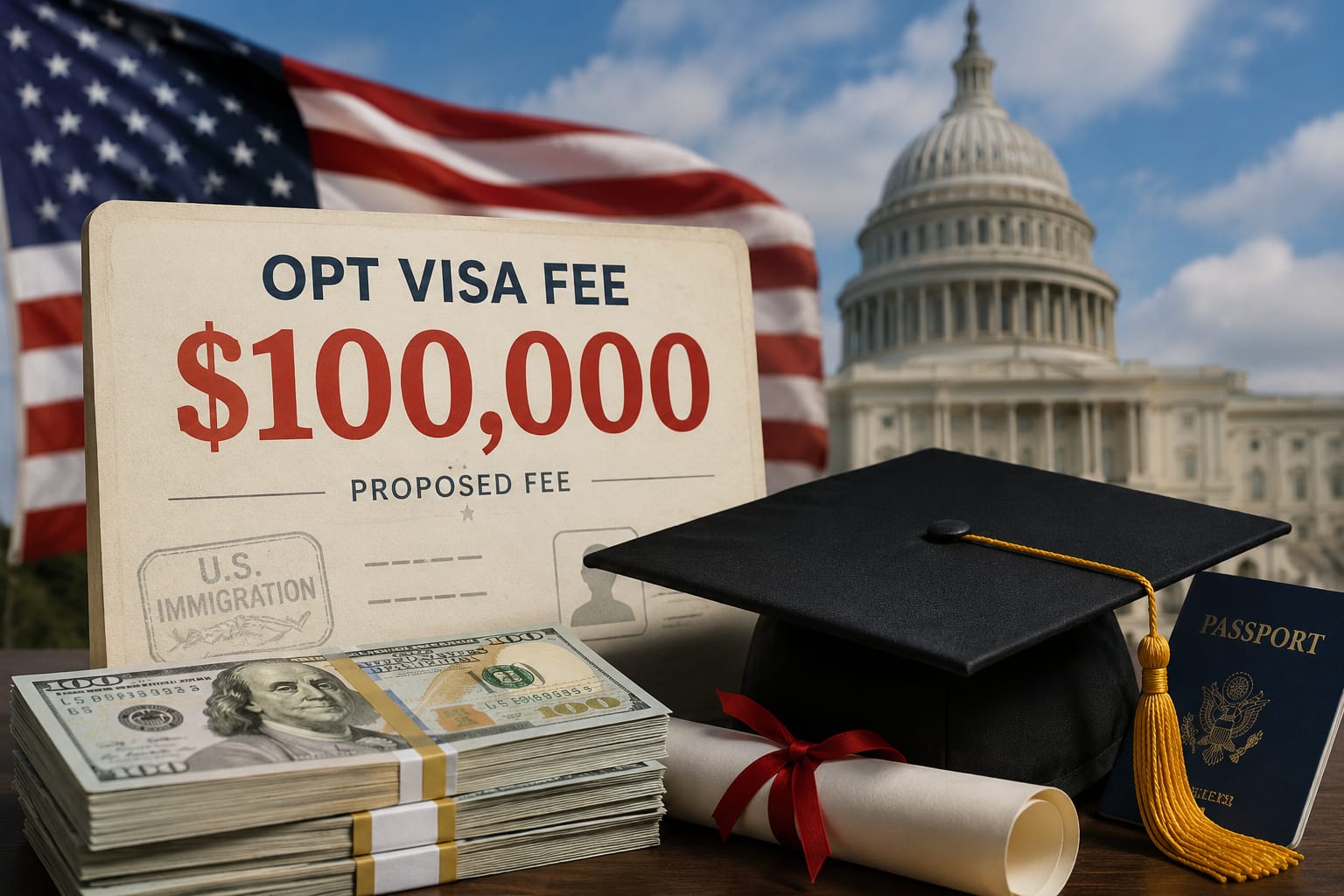
The proposal, which is under active consideration, would apply to graduates seeking employment through the Optional Practical Training program, a key pathway for foreign students to gain work experience after completing their degrees.
If implemented, the fee would represent a significant financial hurdle for international students, many of whom already pay high tuition and living costs. The OPT program currently allows graduates to work for up to three years in fields related to their studies, often serving as a stepping stone to longer-term work visas.
Supporters of the fee argue it would help recoup costs associated with training foreign workers and protect jobs for American graduates. Critics, however, contend that such a steep charge would deter top talent from studying and working in the U.S., potentially driving skilled workers to countries with more welcoming immigration policies.
The proposal is part of a broader review of immigration rules affecting international students, which has already included stricter visa screening and changes to the H-1B lottery system. No final decision has been made, and the plan would require formal rulemaking before taking effect.
Highlighted words show why each story was matched

NRI Herald • August 28, 2026
NRI Herald • August 13, 2026

NRI Herald • August 31, 2026
NRI Herald • August 24, 2026