Moonshot, Alibaba AI Models Challenge Silicon Valley Giants
Tech desk
NRI Herald • July 20, 2026
3 min read
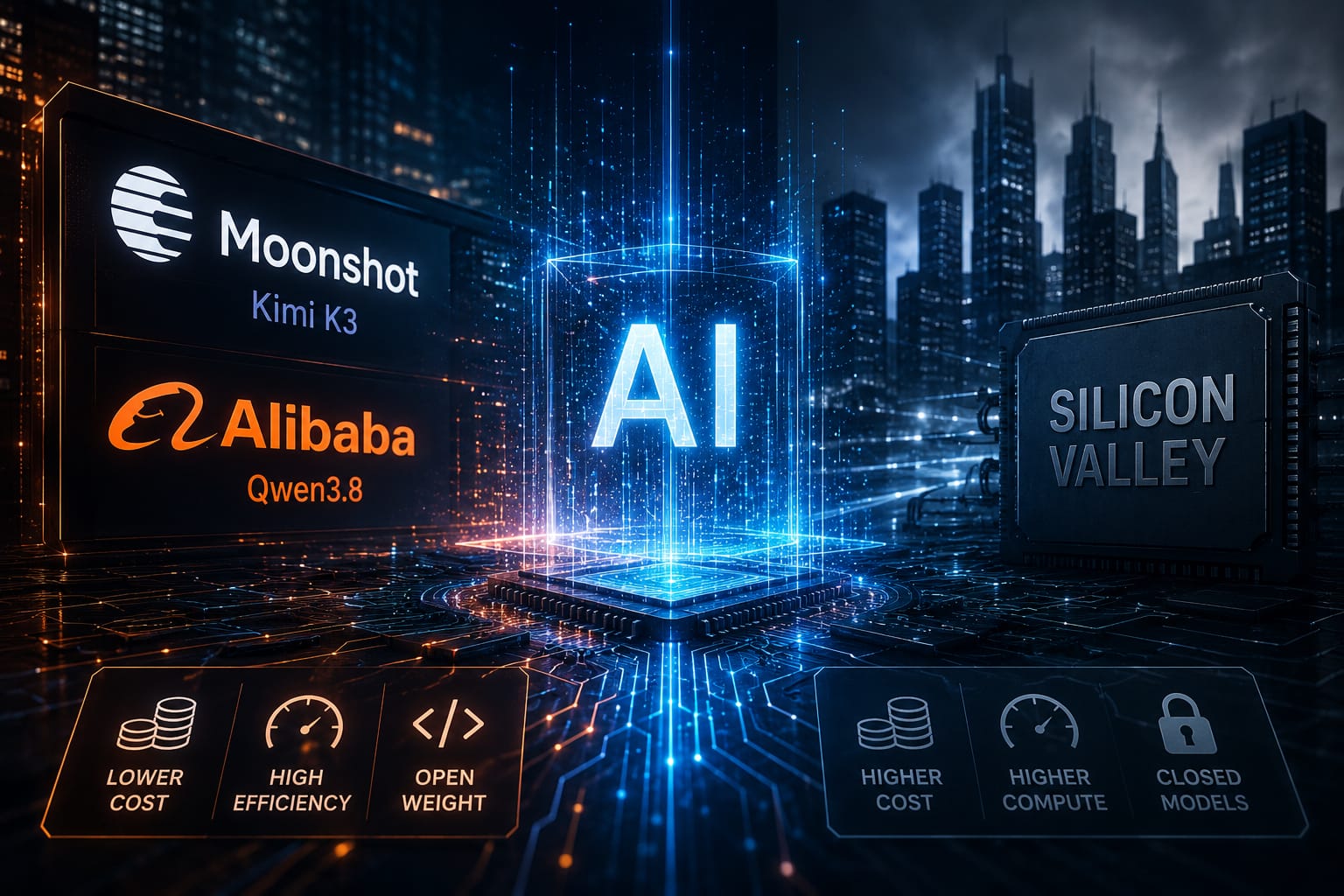
Moonshot AI's Kimi K3 and Alibaba's Qwen3.8 are among the latest releases from Chinese companies that are gaining attention for their strong performance and cost efficiency. These models are designed to deliver near-frontier capabilities while operating at a fraction of the cost of comparable US systems.
A key differentiator is their open-weight approach. Unlike many proprietary models from American tech giants, Moonshot and Alibaba allow developers to access and modify the underlying weights, enabling broader customization and deployment. This openness, combined with lower operational expenses, is attracting interest from startups and enterprises seeking affordable AI solutions.
The competitive pressure is reshaping the global AI landscape. While Silicon Valley firms have long dominated the field, the emergence of cost-effective alternatives from China is forcing a reevaluation of pricing and accessibility. Analysts note that the shift could accelerate adoption of AI across industries that previously found cutting-edge models prohibitively expensive.
Both companies are expanding their offerings to meet growing demand. Moonshot has positioned Kimi K3 as a versatile assistant capable of handling complex tasks, while Alibaba's Qwen3.8 targets a wide range of applications, from coding to customer service. The models are available through cloud platforms and direct downloads, making them accessible to a global developer community.
The rise of these Chinese models underscores a broader trend: the center of AI innovation is no longer confined to the United States. As competition intensifies, the focus is shifting toward efficiency and openness, benefiting users worldwide with more choices and lower costs.
Highlighted words show why each story was matched
NRI Herald • August 29, 2026

NRI Herald • August 25, 2026
NRI Herald • August 3, 2026

NRI Herald • August 4, 2026