US Tax Filing Basics for H-1B Workers and New Immigrants
NRI Guide desk
NRI Herald • July 12, 2026
3 min read
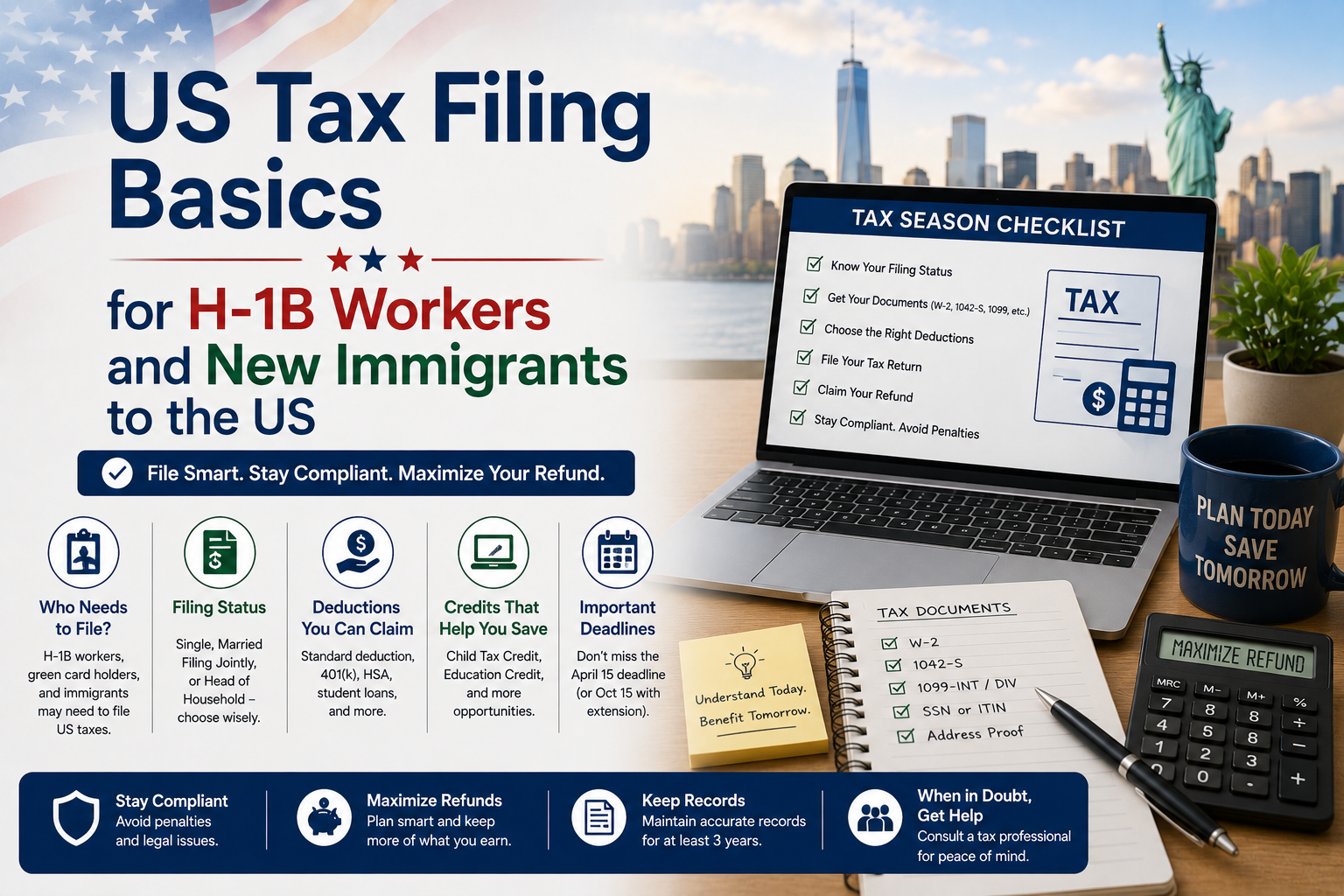
Your first US tax season can feel bewildering after India's system. The good news is that for most H-1B workers it is fairly routine. Here is the map: who counts as a resident, which forms you file, and the traps newcomers from India hit most. This is general information, not tax advice.
The US taxes based on tax residency, not your visa label. Most H-1B holders become US tax residents under the substantial-presence test, a day-count of your time in the US. Residents report worldwide income; non-residents report only US income. Your very first year can be part-year or dual-status, which is where many people get help.
As an H-1B worker your paycheck has Social Security and Medicare taxes (together called FICA) withheld, on top of income tax. These fund US retirement and health programs. Students on F-1 are often exempt from FICA for a period, but H-1B workers generally are not.
Most filers take the standard deduction rather than itemising. The federal deadline is generally April 15, with an extension available to file (though not to pay) later. If too much was withheld, you get a refund; if too little, you owe.
Our separate NRI taxes guide goes deeper on the India side and the treaty.
For most H-1B workers, US filing is a W-2, a Form 1040, a state return, and the foreign-account disclosures. Get the first, dual-status year right, and consider a cross-border professional if you still have Indian income or accounts. Confirm current thresholds and deadlines at irs.gov.
Highlighted words show why each story was matched

NRI Herald • August 17, 2026
NRI Herald • August 17, 2026

NRI Herald • August 2, 2026

NRI Herald • July 27, 2026