US Work Visas Face Rising Uncertainty as Backlogs Grow
Visa & Immigration desk
NRI Herald • August 18, 2026
3 min read
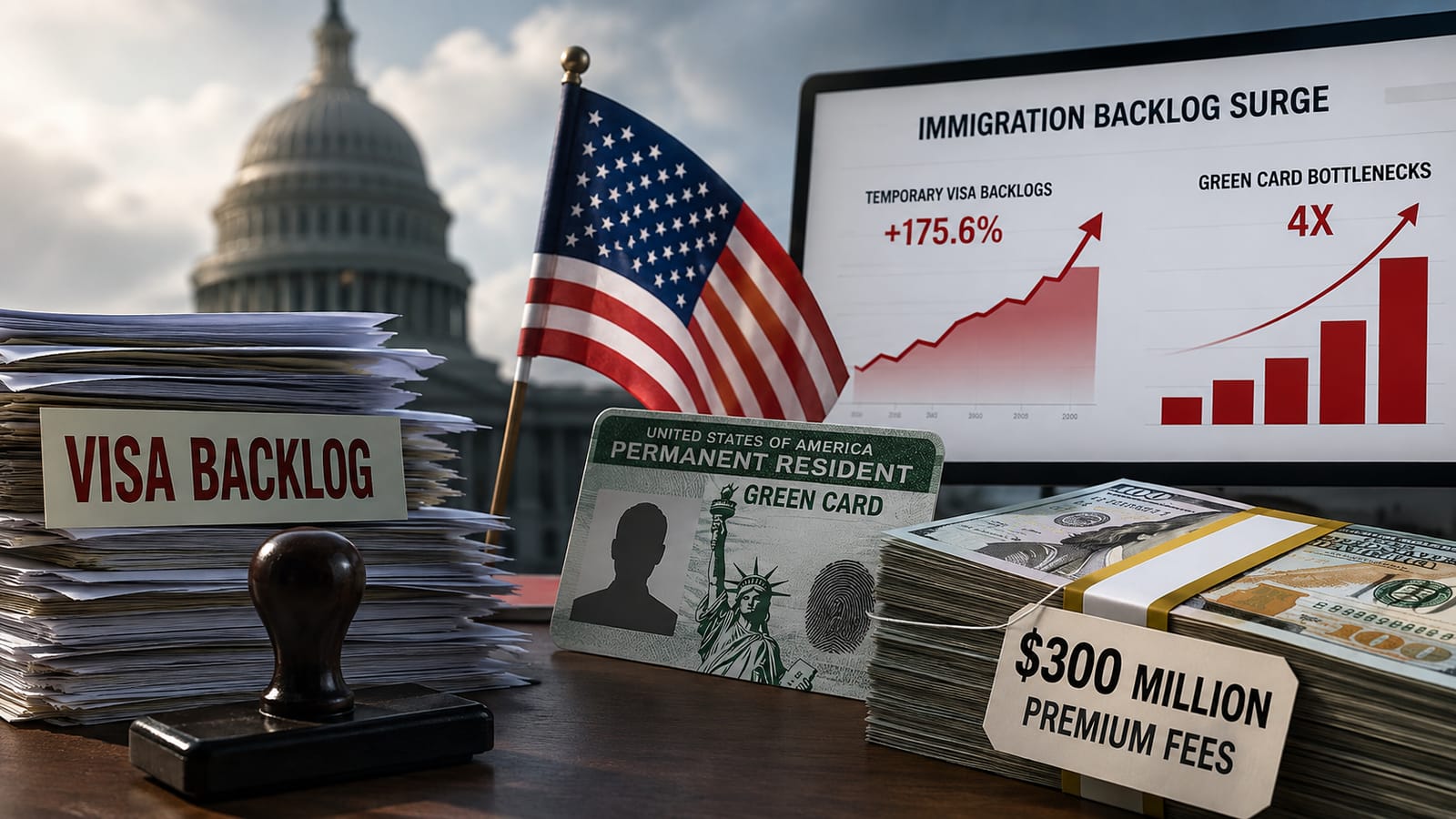
The American Immigration Council's analysis of a decade of USCIS data found that while approval rates for H-1B, L-1, and O visas remained above 90 percent, the agency processed more than 456,000 H-1B petitions in FY2025 alone, contributing to a growing backlog. The backlog of employment-based green card petitions reached a record 180,439 pending cases by the end of FY2025, more than quadrupling over the past decade.
At the current processing pace, clearing that green card backlog would take more than nine months. Many applicants paid extra for faster processing, generating an estimated $300 million in fees for USCIS in FY2025. Denial rates also rose in key categories, with roughly one in six employment-based immigrant petitions denied at one point in FY2025, and denial rates for EB-1A and EB-2 NIW categories nearly doubling during the fiscal year.
Even after USCIS approves a petition, legal caps on employment-based green cards mean workers can wait years for a visa number. By the end of FY2025, more than 642,000 approved workers were still waiting for a visa number to become available.
Nan Wu, the Council's director of research, said the system tells high-skilled workers their talent is wanted for building companies and conducting research, but it cannot tell them whether they can build a future in the United States. Steve Hubbard, senior data scientist, added that the uncertainty makes it harder for workers to build lives and for employers to retain talent.
Highlighted words show why each story was matched
NRI Herald • August 18, 2026
NRI Herald • August 28, 2026

NRI Herald • August 31, 2026
NRI Herald • August 18, 2026