USCIS Stricter Public Charge Rule 2026: Impact on Indian Green Cards
Visa & Immigration desk
NRI Herald • July 18, 2026
3 min read
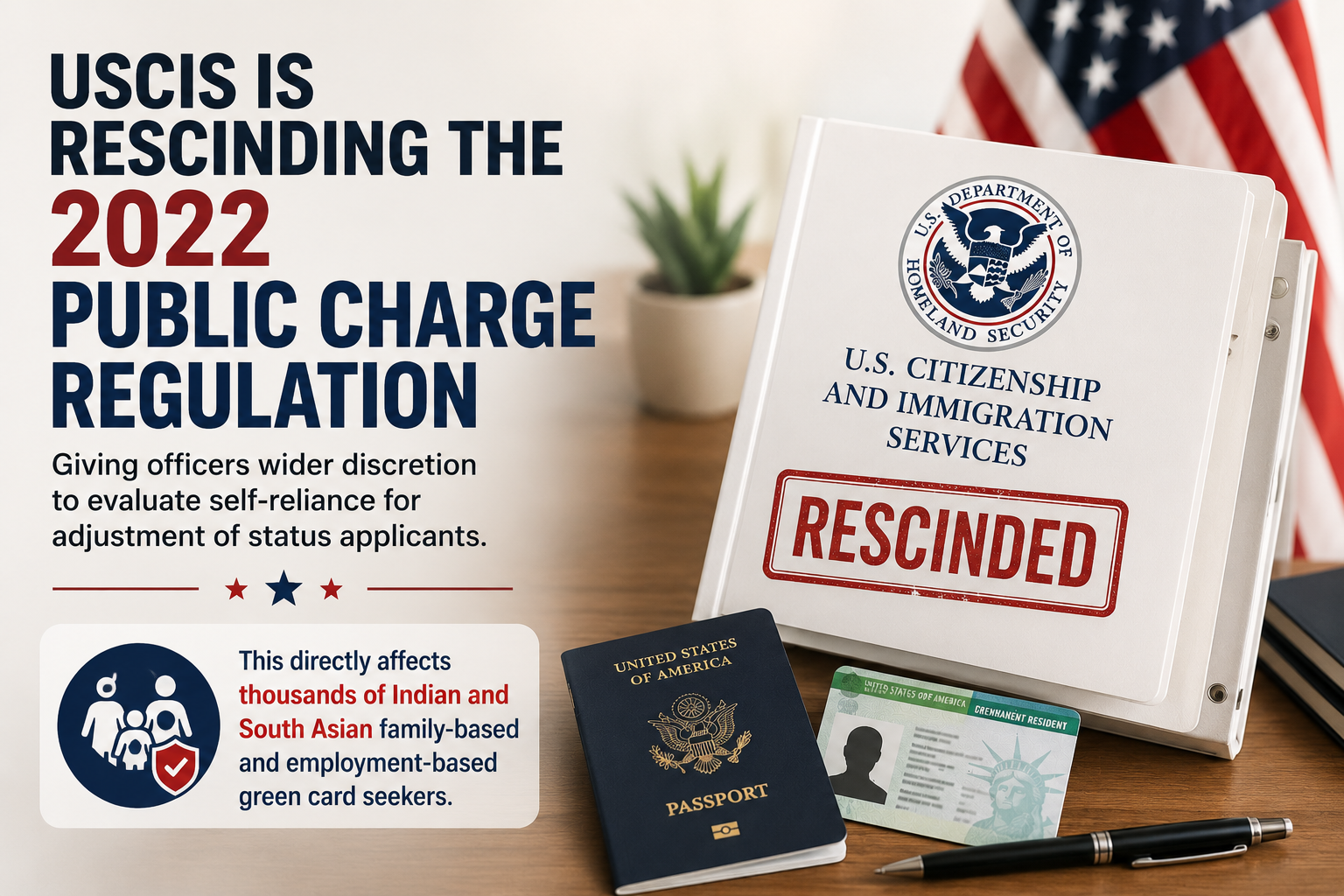
The new policy, effective immediately, replaces the 2022 regulation that had limited public charge determinations to the receipt of cash assistance or long-term institutionalization. Under the rescinded rule, officers were restricted from considering non-cash benefits like Medicaid or food stamps. Now, adjudicators can weigh a broader range of factors, including an applicant's income, assets, health, and past use of public benefits, to determine if they are likely to become a public charge.
For Indian nationals, many of whom come to the U.S. on H-1B or L-1 visas and later adjust status through employment-based categories, the change adds a layer of uncertainty. Family-based applicants, who often rely on joint sponsors, may also face closer scrutiny. Immigration attorneys advise clients to document financial stability thoroughly, including tax returns, bank statements, and proof of private health insurance, to preempt potential denials.
The move aligns with a broader trend under the current administration to tighten immigration enforcement. However, unlike the 2019 version of the public charge rule, which was struck down in court, the new policy does not require applicants to meet a specific income threshold. Instead, it grants officers case-by-case discretion, which critics argue could lead to inconsistent decisions.
Applicants already in the pipeline may be affected if their cases are not yet adjudicated. Those with pending adjustment of status applications should consult an immigration lawyer to assess their risk. The USCIS policy manual has been updated to reflect the change, and officers have been trained on the new standards.
The rule does not apply to refugees, asylees, or certain other categories, and it does not affect visa applications processed at U.S. consulates, which are governed by separate rules. Still, for the thousands of Indian nationals awaiting green cards, the shift signals a more cautious era in immigration adjudication.
Highlighted words show why each story was matched
NRI Herald • August 20, 2026

NRI Herald • August 23, 2026
NRI Herald • August 18, 2026
NRI Herald • August 14, 2026