H-1B Lottery, Explained: How Registration, Selection and the Cap Actually Work
NRI Guide desk
NRI Herald • July 12, 2026
3 min read
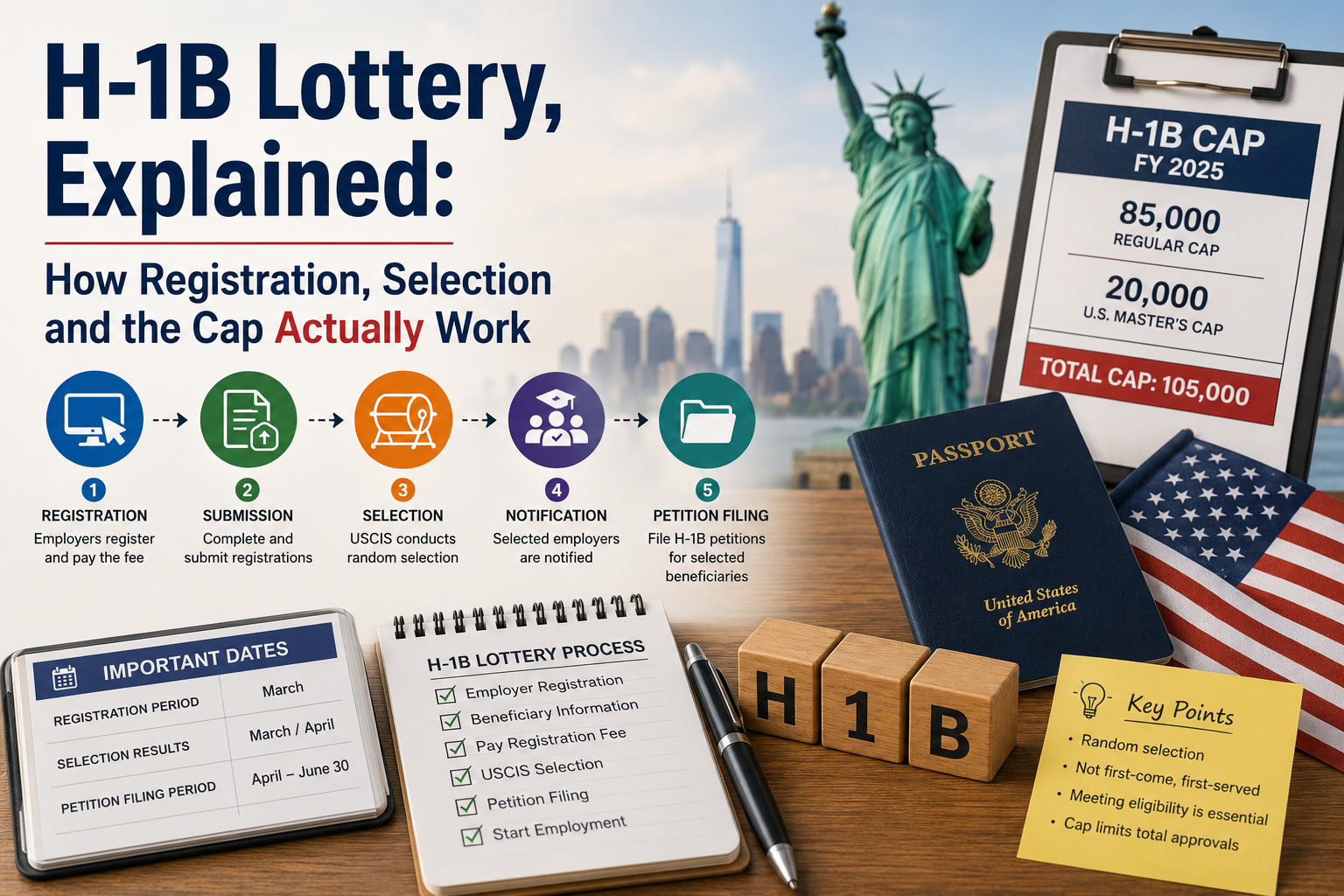
Every spring, hundreds of thousands of skilled workers, a large share of them from India, compete for one of the most sought-after work visas in the United States. The H-1B cap system decides who even gets the chance to apply, and it changed significantly for the 2026 season. Here is how it works now, from start to finish.
The H-1B is a temporary work visa for specialty occupations that normally require at least a bachelor's degree, roles in engineering, IT, finance, medicine and similar fields. A US employer has to sponsor it; you cannot file for yourself. Because demand vastly exceeds supply, Congress caps the number of new H-1Bs issued each year.
For each fiscal year, US Citizenship and Immigration Services (USCIS) can approve 65,000 new cap-subject H-1Bs, plus 20,000 more reserved for people who hold a US master's degree or higher, known as the master's cap. Some employers, including universities, nonprofit research bodies and government research organisations, are cap-exempt and can file at any time.
The first step is a cheap electronic registration in March, not a full petition. Your employer creates a USCIS online account and submits your details during a window that runs about two weeks. The registration fee is 215 dollars per beneficiary. If more registrations arrive than there are visas, USCIS runs a selection.
This is the big change. Under a DHS final rule that took effect in early 2026, for the FY2027 cap season selection is no longer a purely random lottery. It is now a wage-weighted selection: registrations tied to higher wage levels (relative to the prevailing wage for the role and location) get proportionally more chances of being selected. Selection is still run per unique person, so registering with multiple employers does not multiply your odds. The practical effect is that higher-paid roles now have a meaningfully better chance than entry-level ones.
Because selection now leans on wage level, there is no single odds figure that applies to everyone, your chances rise with your offered wage relative to the prevailing wage. A US master's degree still adds a second chance through the master's cap. Treat any headline percentage with caution; USCIS publishes the actual registration and selection counts after each cycle.
In September 2025 a presidential proclamation imposed a 100,000 dollar fee on certain new H-1B petitions for workers who are outside the United States (consular cases). As of mid-2026 this fee is the subject of active litigation, one federal court struck it down while another upheld it, and it has been applying while the government's appeals proceed. Because its status can change with each court ruling, anyone affected should confirm whether the fee currently applies to their case before filing. It does not apply to everyone, and the situation is evolving.
You get a filing window of at least 90 days to submit the full H-1B petition with all the evidence: degree, detailed job description, the labor condition application, and fees. Approval is not automatic, because the petition still has to prove the role is a genuine specialty occupation. Many petitions request an October 1 start date.
Nothing is lost except the registration fee, and your employer can register you again next year. In the meantime, people commonly keep their status another way:
The H-1B is still the main route for Indian professionals to work long-term in the US, but the 2026 changes, wage-weighted selection and the contested 100,000 dollar fee, reshaped the odds and the cost. Because several of these rules are new and some are in court, confirm the current position on uscis.gov before you act, and start the conversation with your employer well ahead of the March window.
Fresh headlines while we surface more on this topic
'%2F%3E%3Cstop%20offset%3D'1'%20stop-color%3D'hsl(354%2C%2055%25%2C%2038%25)'%2F%3E%3C%2FlinearGradient%3E%3C%2Fdefs%3E%3Crect%20width%3D'800'%20height%3D'600'%20fill%3D'url(%23g)'%2F%3E%3Ctext%20x%3D'400'%20y%3D'300'%20text-anchor%3D'middle'%20font-family%3D'Georgia%2Cserif'%20font-size%3D'44'%20font-weight%3D'700'%20fill%3D'rgba(255%2C255%2C255%2C0.92)'%3ENRI%20Herald%3C%2Ftext%3E%3Ctext%20x%3D'400'%20y%3D'340'%20text-anchor%3D'middle'%20font-family%3D'Arial%2Csans-serif'%20font-size%3D'18'%20letter-spacing%3D'4'%20fill%3D'rgba(255%2C255%2C255%2C0.66)'%3ECOMMUNITY%3C%2Ftext%3E%3C%2Fsvg%3E)
'%2F%3E%3Cstop%20offset%3D'1'%20stop-color%3D'hsl(234%2C%2055%25%2C%2038%25)'%2F%3E%3C%2FlinearGradient%3E%3C%2Fdefs%3E%3Crect%20width%3D'800'%20height%3D'600'%20fill%3D'url(%23g)'%2F%3E%3Ctext%20x%3D'400'%20y%3D'300'%20text-anchor%3D'middle'%20font-family%3D'Georgia%2Cserif'%20font-size%3D'44'%20font-weight%3D'700'%20fill%3D'rgba(255%2C255%2C255%2C0.92)'%3ENRI%20Herald%3C%2Ftext%3E%3Ctext%20x%3D'400'%20y%3D'340'%20text-anchor%3D'middle'%20font-family%3D'Arial%2Csans-serif'%20font-size%3D'18'%20letter-spacing%3D'4'%20fill%3D'rgba(255%2C255%2C255%2C0.66)'%3ECOMMUNITY%3C%2Ftext%3E%3C%2Fsvg%3E)
'%2F%3E%3Cstop%20offset%3D'1'%20stop-color%3D'hsl(341%2C%2055%25%2C%2038%25)'%2F%3E%3C%2FlinearGradient%3E%3C%2Fdefs%3E%3Crect%20width%3D'800'%20height%3D'600'%20fill%3D'url(%23g)'%2F%3E%3Ctext%20x%3D'400'%20y%3D'300'%20text-anchor%3D'middle'%20font-family%3D'Georgia%2Cserif'%20font-size%3D'44'%20font-weight%3D'700'%20fill%3D'rgba(255%2C255%2C255%2C0.92)'%3ENRI%20Herald%3C%2Ftext%3E%3Ctext%20x%3D'400'%20y%3D'340'%20text-anchor%3D'middle'%20font-family%3D'Arial%2Csans-serif'%20font-size%3D'18'%20letter-spacing%3D'4'%20fill%3D'rgba(255%2C255%2C255%2C0.66)'%3ECOMMUNITY%3C%2Ftext%3E%3C%2Fsvg%3E)
'%2F%3E%3Cstop%20offset%3D'1'%20stop-color%3D'hsl(120%2C%2055%25%2C%2038%25)'%2F%3E%3C%2FlinearGradient%3E%3C%2Fdefs%3E%3Crect%20width%3D'800'%20height%3D'600'%20fill%3D'url(%23g)'%2F%3E%3Ctext%20x%3D'400'%20y%3D'300'%20text-anchor%3D'middle'%20font-family%3D'Georgia%2Cserif'%20font-size%3D'44'%20font-weight%3D'700'%20fill%3D'rgba(255%2C255%2C255%2C0.92)'%3ENRI%20Herald%3C%2Ftext%3E%3Ctext%20x%3D'400'%20y%3D'340'%20text-anchor%3D'middle'%20font-family%3D'Arial%2Csans-serif'%20font-size%3D'18'%20letter-spacing%3D'4'%20fill%3D'rgba(255%2C255%2C255%2C0.66)'%3ECOMMUNITY%3C%2Ftext%3E%3C%2Fsvg%3E)