Social Security and 401(k): What Happens if You Move Back to India
NRI Guide desk
NRI Herald • July 12, 2026
3 min read
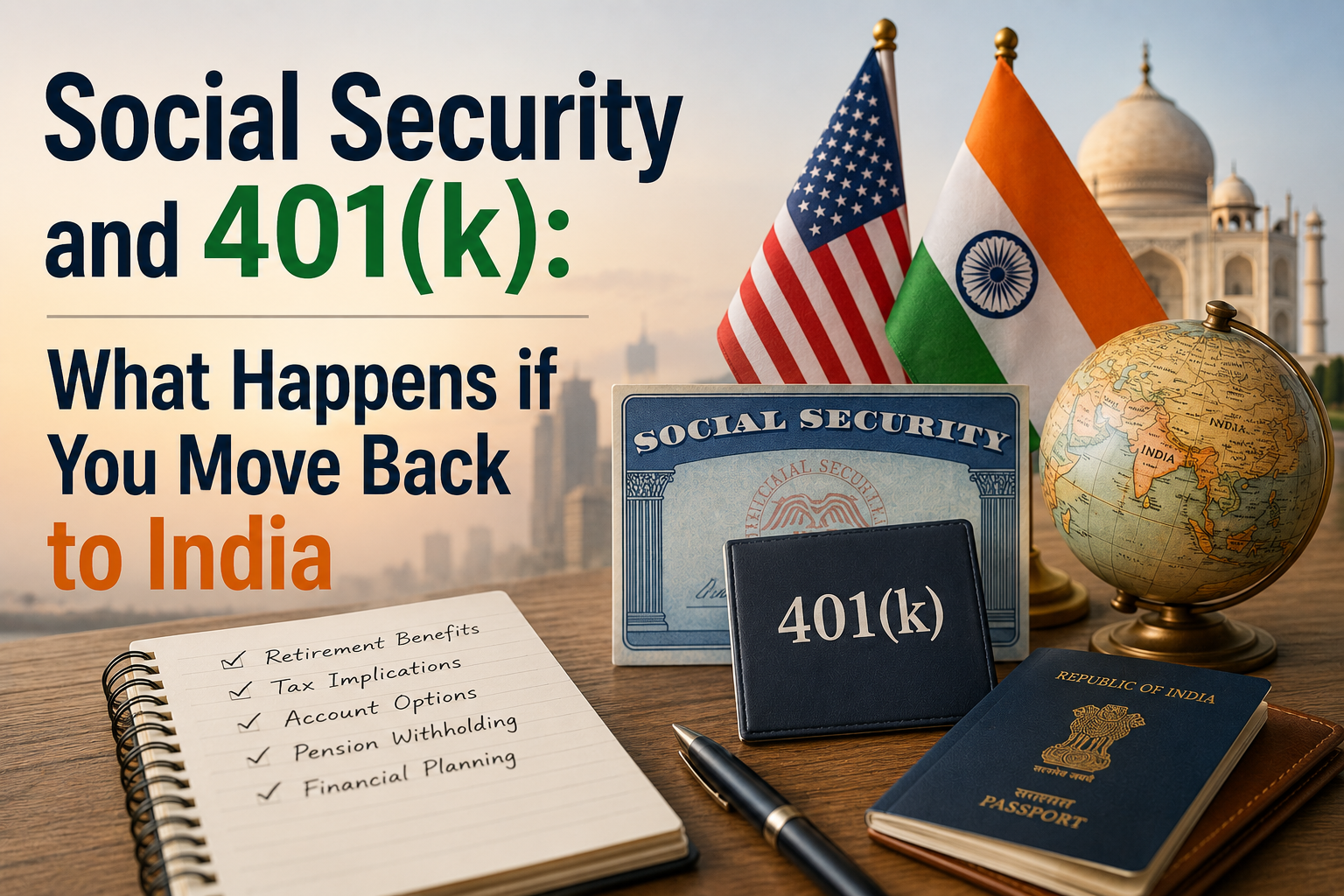
Years of US paychecks quietly build two retirement pots: Social Security, funded by the taxes withheld from every check, and often a 401(k) at work. If you plan to move back to India, both raise real questions. Here is what happens to each. This is general information, not financial advice.
US Social Security retirement benefits generally require about 40 credits, roughly ten years of covered work. If you work in the US for only a few years and leave, you may pay into Social Security through FICA taxes yet never qualify to draw a benefit.
Many countries have a totalization agreement with the US that lets workers combine credits across both systems and avoid paying into both at once. India and the US do not have one. That means H-1B workers typically cannot count their US and Indian work together, and short US stints can leave Social Security contributions stranded. Because this has long been under discussion, confirm the current position before relying on it.
If you reach the credits needed, US Social Security can, in many cases, still be paid to you in India, though provisions such as the Windfall Elimination Provision can reduce the amount for people with pensions from non-covered work. The details are individual, so check with the Social Security Administration.
A US retirement account does not vanish when you move; you generally have choices:
Once you are a non-resident, withdrawals from these accounts can face US withholding and tax, and the India-US tax treaty may affect how they are taxed. This is exactly the kind of cross-border question where a professional pays for themselves.
Assume your 401(k) and IRA travel with you and can keep growing, but plan withdrawals carefully for tax. Treat Social Security as uncertain unless you hit the credits, given there is no US-India totalization agreement. Confirm the current rules with the Social Security Administration, the IRS, and a cross-border adviser.
Fresh headlines while we surface more on this topic
'%2F%3E%3Cstop%20offset%3D'1'%20stop-color%3D'hsl(354%2C%2055%25%2C%2038%25)'%2F%3E%3C%2FlinearGradient%3E%3C%2Fdefs%3E%3Crect%20width%3D'800'%20height%3D'600'%20fill%3D'url(%23g)'%2F%3E%3Ctext%20x%3D'400'%20y%3D'300'%20text-anchor%3D'middle'%20font-family%3D'Georgia%2Cserif'%20font-size%3D'44'%20font-weight%3D'700'%20fill%3D'rgba(255%2C255%2C255%2C0.92)'%3ENRI%20Herald%3C%2Ftext%3E%3Ctext%20x%3D'400'%20y%3D'340'%20text-anchor%3D'middle'%20font-family%3D'Arial%2Csans-serif'%20font-size%3D'18'%20letter-spacing%3D'4'%20fill%3D'rgba(255%2C255%2C255%2C0.66)'%3ECOMMUNITY%3C%2Ftext%3E%3C%2Fsvg%3E)
'%2F%3E%3Cstop%20offset%3D'1'%20stop-color%3D'hsl(234%2C%2055%25%2C%2038%25)'%2F%3E%3C%2FlinearGradient%3E%3C%2Fdefs%3E%3Crect%20width%3D'800'%20height%3D'600'%20fill%3D'url(%23g)'%2F%3E%3Ctext%20x%3D'400'%20y%3D'300'%20text-anchor%3D'middle'%20font-family%3D'Georgia%2Cserif'%20font-size%3D'44'%20font-weight%3D'700'%20fill%3D'rgba(255%2C255%2C255%2C0.92)'%3ENRI%20Herald%3C%2Ftext%3E%3Ctext%20x%3D'400'%20y%3D'340'%20text-anchor%3D'middle'%20font-family%3D'Arial%2Csans-serif'%20font-size%3D'18'%20letter-spacing%3D'4'%20fill%3D'rgba(255%2C255%2C255%2C0.66)'%3ECOMMUNITY%3C%2Ftext%3E%3C%2Fsvg%3E)
'%2F%3E%3Cstop%20offset%3D'1'%20stop-color%3D'hsl(341%2C%2055%25%2C%2038%25)'%2F%3E%3C%2FlinearGradient%3E%3C%2Fdefs%3E%3Crect%20width%3D'800'%20height%3D'600'%20fill%3D'url(%23g)'%2F%3E%3Ctext%20x%3D'400'%20y%3D'300'%20text-anchor%3D'middle'%20font-family%3D'Georgia%2Cserif'%20font-size%3D'44'%20font-weight%3D'700'%20fill%3D'rgba(255%2C255%2C255%2C0.92)'%3ENRI%20Herald%3C%2Ftext%3E%3Ctext%20x%3D'400'%20y%3D'340'%20text-anchor%3D'middle'%20font-family%3D'Arial%2Csans-serif'%20font-size%3D'18'%20letter-spacing%3D'4'%20fill%3D'rgba(255%2C255%2C255%2C0.66)'%3ECOMMUNITY%3C%2Ftext%3E%3C%2Fsvg%3E)
'%2F%3E%3Cstop%20offset%3D'1'%20stop-color%3D'hsl(120%2C%2055%25%2C%2038%25)'%2F%3E%3C%2FlinearGradient%3E%3C%2Fdefs%3E%3Crect%20width%3D'800'%20height%3D'600'%20fill%3D'url(%23g)'%2F%3E%3Ctext%20x%3D'400'%20y%3D'300'%20text-anchor%3D'middle'%20font-family%3D'Georgia%2Cserif'%20font-size%3D'44'%20font-weight%3D'700'%20fill%3D'rgba(255%2C255%2C255%2C0.92)'%3ENRI%20Herald%3C%2Ftext%3E%3Ctext%20x%3D'400'%20y%3D'340'%20text-anchor%3D'middle'%20font-family%3D'Arial%2Csans-serif'%20font-size%3D'18'%20letter-spacing%3D'4'%20fill%3D'rgba(255%2C255%2C255%2C0.66)'%3ECOMMUNITY%3C%2Ftext%3E%3C%2Fsvg%3E)